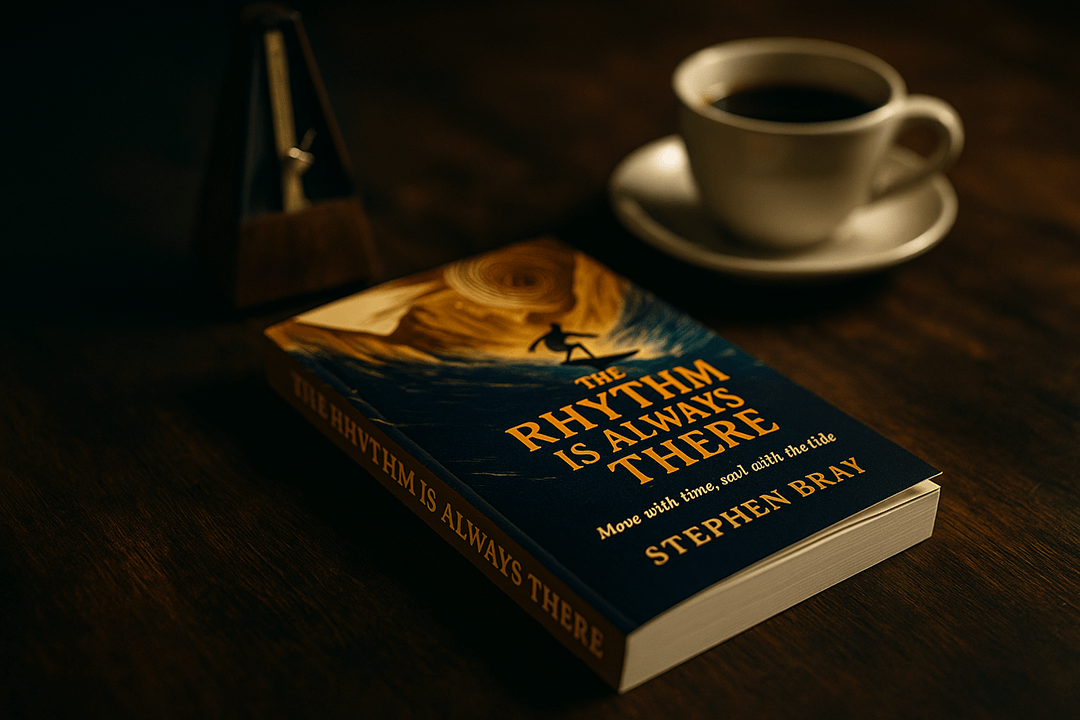
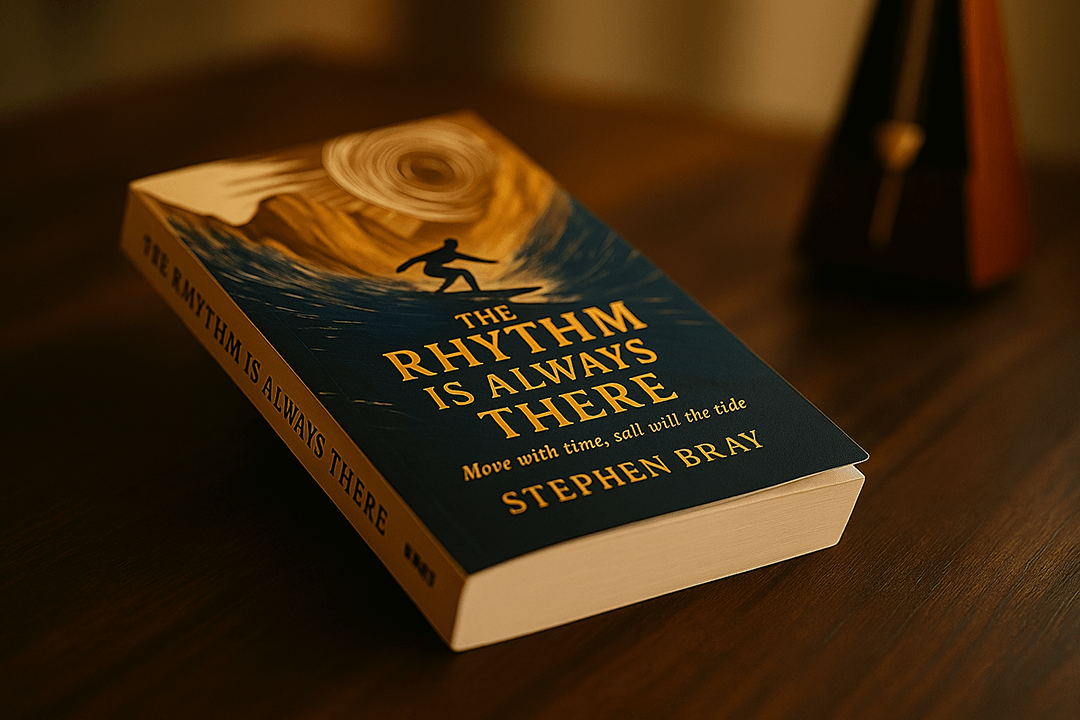
THE RHYTHM IS ALWAYS THERE
Move with time, sail with the tide
How do you build, adapt, and survive when Everything Changes?
Most people try to fight the tide.
They cling to old strategies, old identities, and old systems long after the rhythm has shifted.
They build as if success is static.
They panic as if failure is final.
But the world doesn’t work that way.
It moves in waves: economic, emotional, generational, and spiritual.
And those who thrive are not the ones who resist change, but those who learn to work with it.
The Rhythm Is Always There is not a list of tactics. It is a lens—a way of seeing the patterns that shape your life, your leadership, and your legacy. Drawing from centuries of history, timeless psychology, and personal stories of real people navigating disruption, Stephen Bray offers a wiser way to build and lead.
Inside The Book
Youth Bubbles and Revolutions
If the Grey Wave brings drift, the Youth Bubble brings fire.
Societies with too few young people grow cautious.Societies with too many grow dangerous.
And history proves it.
The Energy of Youth
Young people don’t just want jobs.They want meaning.They want status.They want a future they can believe in.
When they get it—societies boom.
When they don’t—societies burn.
You can see it again and again.
The American Revolution was driven by young merchants and farmers.The French Revolution by young clerks and artisans.The Arab Spring by young graduates with smartphones—and no jobs.
Youth bubbles create energy. Energy creates movement. Movement creates change—whether you’re ready for it or not.
The Perfect Storm: Too Many, Too Fast
It’s not just having young people. It’s having too many of them at once—and not enough for them to do.
When opportunity grows slower than ambition, frustration boils over.
Egypt’s revolution in 2011 wasn’t started by generals. It was started by students.
Even today, regions with the largest youth bubbles—Africa, the Middle East, South Asia—are ticking clocks.
Where ambition outpaces opportunity, change is inevitable.
Youth Bubbles in Business
The pattern isn’t just political.
In business, youth bubbles drive surges of innovation.
Silicon Valley in the 1970s and 1980s.China’s tech explosion after 2000.The birth of hip-hop, skate culture, gaming.
When a generation is young, connected, and restless, entire industries get rewritten.
But if businesses miss the energy—or try to bottle it up—someone else will use it against them.
Kodak missed it. Nokia missed it. MySpace missed it.
Amazon, Apple, Facebook, and TikTok didn't.
They built empires on the back of youth energy.
The Cycle Beneath the Surface
Youth bubbles are part of a deeper cycle:
Birth rates surge during prosperity and peace.
A large young population grows up expecting more.
If the system adapts, they create a boom.
If the system fails, they create a revolution.
It’s not ideology that drives upheaval. It’s arithmetic.
Too many young hearts.Not enough doors opening.
The Grey Wave feels slow.The Youth Bubble feels fast.
Both are real. Both are part of the same cycle.
And both can break you—if you aren’t paying attention.
The Tide That Drowns and Lifts
Demographics aren’t headlines.They’re gravity.
They shape the economy, the workforce, the culture, the politics—whether we like it or not.
And they move in cycles.
The Grey Wave shows what happens when populations age: Fewer workers. More pensioners. Rising healthcare costs. Slowing growth.
Youth Bubbles show what happens when populations surge with energy: More ambition. More risk. More pressure. More revolution if the system can't keep up.
Migration Tides show how pressure finds a release:When there’s no room to grow, people move. When there’s no one left to work, economies pull newcomers in.
None of this is new.
It has happened before. It will happen again.
Prosperity leads to low birthrates. Stagnation leads to frustration. Frustration leads to movement—or explosion.
Demographic cycles don't ask for permission.They just roll forward.
If you build your business, your strategy, or your life ignoring these tides—you'll be swept away.
If you learn to read them—you can sail ahead of the storm.
The future won’t belong to the loudest or the fastest. It will belong to those who see the long tides coming—and move early
Why I Wrote This Book
This book began as a side current to The Art of Failing Well. I set out to write the first leg of a three-part voyage, yet the material kept circling back to one truth: life loves to repeat itself.
History hides its loops in new costumes. The spur put farm workers under the hoof of the mounted knight. Today, drones and algorithms alter the field in much the same way. The technology shifts, yet the same frequency returns, like a note resonating across scales.
I wrote this because those echoes matter. Once you hear the rhythm beneath events, you no longer mistake it for chance. You can choose whether to let it keep playing, or to shift the tone and let the whole field change with it.
The same rhythm shapes our present. A surge of youth without opportunity has toppled kings and rewritten markets. An ageing wave has slowed economies and bent policy. These cycles move like tides — predictable in pattern, unstoppable in force — and we ignore them at our peril.
You may recognise your own story somewhere in these pages. Not because the details match, but because the pattern does.
As an Amazon Associate I earn from qualifying purchases.