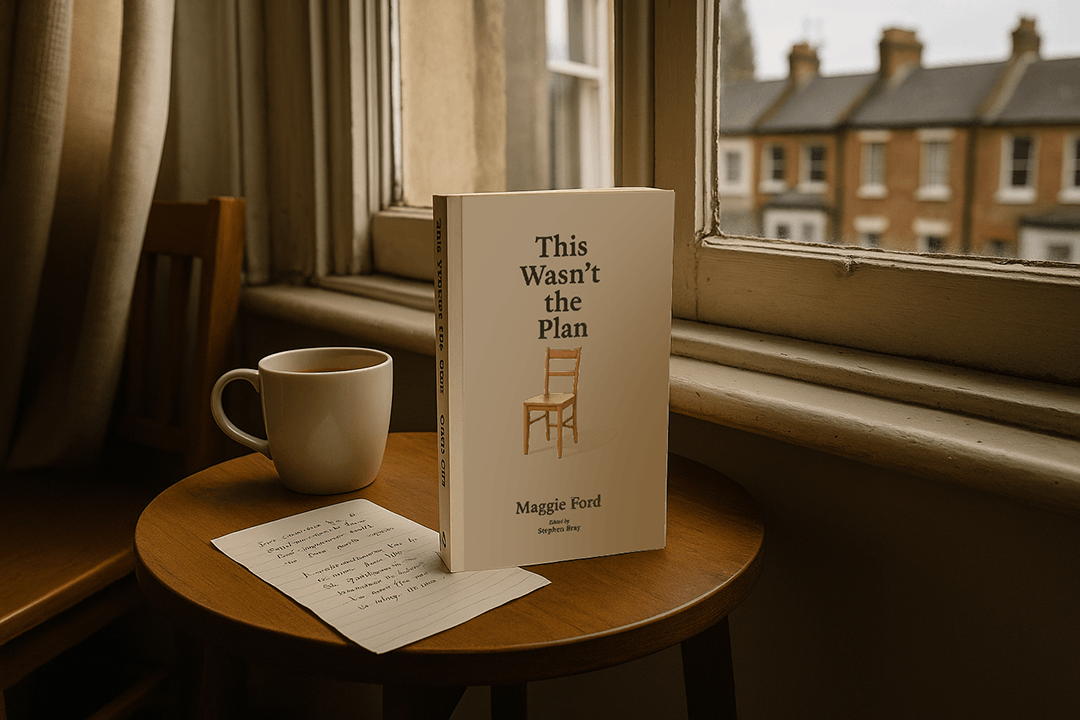
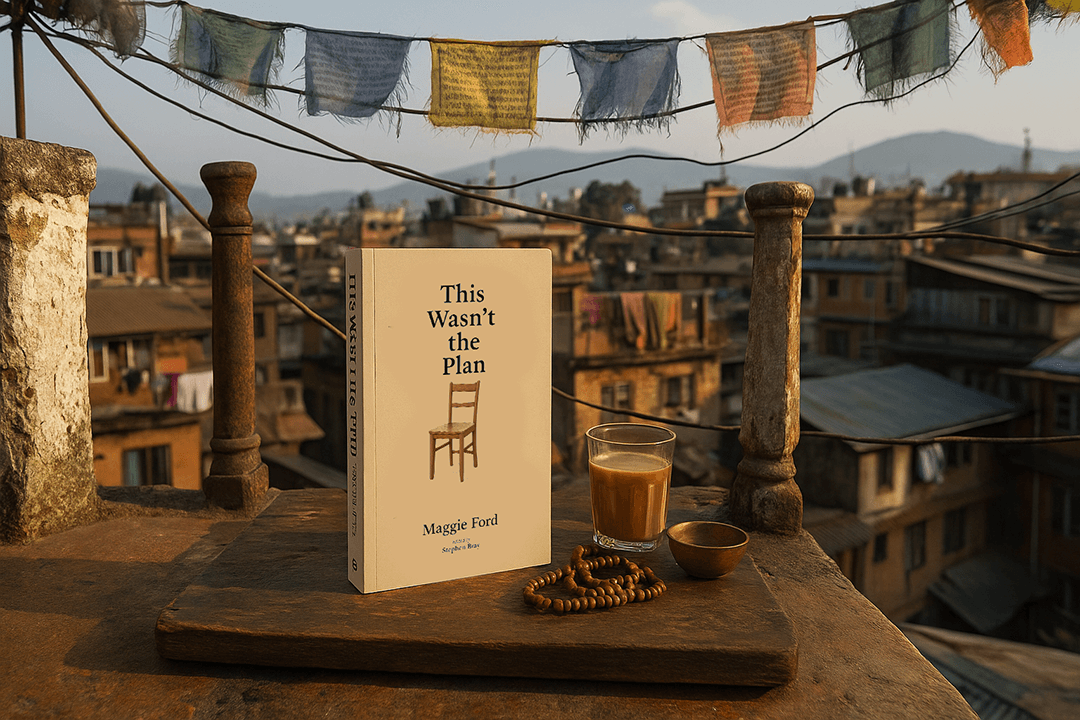
THIS WASN'T THE PLAN
On Pressure, Disappearance, and Not Going Back
What happens when you stop trying to please and start telling the truth?
Maggie Ford thought she was only leaving a job.
In reality, she stepped away from a version of herself: obliging, adaptable, indispensable, and quietly unravelling.
This Wasn’t the Plan offers a clear-eyed, unsentimental look at what unfolds when women choose not to fade into the background.
In concise entries, by turns sharp, spare, and darkly comic, Maggie explores burnout, suppressed anger, surprising alliances, and the gradual recovery of a self she had almost stopped recognising.
She doesn’t collapse.
She doesn’t claim victory.
She walks away and keeps moving.
For readers drawn to Deborah Levy, Rachel Cusk, and anyone who has ever smiled while biting back the truth, this book doesn’t promise a success story. It marks the terrain of what comes next.
Lightly edited by Stephen Bray.
Inside The Book
Wrong Face, Right Room
They smiled when I walked in.
Not because I was brilliant. Because I was safe.
Well-dressed. Calm voice. Dark enough to tick the diversity box, light enough not to scare their dads.
I wasn’t hired to challenge them.
I was hired to make the place look progressive in the brochure.
Or maybe just photogenic in the strategy deck.
They called me “refreshing.”
Which is what people say when they want to keep their power and your polish.
I used to laugh at their jokes.
Not because they were funny, but because I didn’t want to be the one who didn’t get it.
Every woman in the room was either older than me, or quieter than me.
I made them comfortable by being both, at once.
You learn the choreography.
You lean in.
ut not too far.
Speak up, but never louder than the man to your left.
Don’t wear heels too often, you’ll look like you’re trying.
Don’t wear flats too often, you’ll look like you’ve given up.
Smile when challenged.
Say “I hear you” instead of “you’re wrong.”
Breathe through the moment he takes credit for your idea.
Again.
There was a moment once, a team photo.
I was placed near the middle, but not too near.
Visible, but not focal.
They cropped the picture later. I was still in it. Just elbow and earring.
* * *
The betrayal was quiet.
Which made it worse.
I’d written the proposal in three parts, over four weekends.
It was tight. Strategic. Specific. I’d cited data, mapped stakeholders, even forecasted impact.
When I sent it, they said nothing for two weeks.
Then it reappeared, six weeks later.
In another man’s hand.
Same structure. Same phrasing. Same graphs, even.
They’d changed the title and the author, but not the backbone.
He called it “disruptive.”
They applauded. Said he was thinking outside the box.
I wasn’t angry at first. I was… suspended.
Like someone had flicked the lights on during a party I didn’t know I wasn’t invited to.
I looked around the room, waiting for someone to mention my name.
They didn’t.
Not one.
Afterwards, he came over and said,
“You started something great, Maggie. I just picked it up and ran with it.”
Ran with it.
Like I’d dropped it. Like I wasn’t still holding the bruises from carrying it.
I said, “Thanks.”
Like I meant it.
Later, in the bathroom, I sat on the closed toilet lid and looked at myself in the mirror.
I didn’t cry. I didn’t throw up.
I just stared.
Like I was trying to see the person who had let it happen.
Because I had.
* * *
I thought I was playing the long game.
That if I proved myself enough times, they’d see me.
That if I smiled just right, and hit every target, they’d realise I was never the intern, I was the architect.
But that’s not how it works.
They don’t forget your place.
They remember it for you.
I wore navy, not red.
Straightened my hair.
Learned their sports metaphors.
Even read the books they name-dropped in leadership meetings.
I never cried.
I always offered to take minutes.
I pretended not to notice when they got my name wrong.
I stayed late. Didn’t bill the hours.
Answered emails on holiday.
Covered for people who’d never cover for me.
I spent a year drafting a proposal they said was too ambitious.
They gave it to a man six months later.
Called it visionary.
* * *
When I finally stopped performing, I realised something awful.
I’d been complicit.
Not in their behaviour, but in their comfort.
I’d helped them forget that power protects itself.
Because I let them believe I wasn’t dangerous.
And I wasn’t.
Not then.
But I would be.
Why Maggie Wrote This Book
Maggie Ford could have chosen many paths. She chose to write this book and, in doing so,
stepped fully into her life as an artist. That role fits her better than anything she trained for.
She tested those other options. They failed to fit.
I doubt she will write another book. No sequel waits in the wings.
Right now, she does the work she came to do. Nothing more needs saying.
To take on another book would mean turning away from herself again.
Maggie will not do that, no matter how generous the offer.
How many of us, watching, can make the same claim?
As an Amazon Associate I earn from qualifying purchases.