Why systems thinking, rather than clever tools, will determine who thrives in the next wave of automation.
How Can You Use AI Without Losing the Plot?
AI alone won’t save your business. In fact, without structure, it may accelerate confusion. The most successful leaders won’t be those with the most advanced agents, they’ll be the ones who know how to embed those agents within repeatable, measurable systems. This post explores how systems thinking (rooted in Peter Checkland’s soft systems methodology) can turn flashy automation into real leverage and why you should stop expecting emotional resolve to carry the load.
📌 Frequently Asked Questions
Q: Isn’t AI supposed to replace the need for systems?
No. AI enhances execution, but it still needs guardrails. Without clear triggers, processes, and feedback loops, even the smartest AI will amplify chaos.
Q: What’s the link between systems thinking and emotional overwhelm?
Emotional fatigue often results from poor system design. Decision fatigue, unclear ownership, or reactive meetings burn energy. Systems remove that friction by front-loading decisions and clarifying roles.
Q: What’s a practical way to start using AI and systems together?
Begin by structuring your workflows e.g., use memos to clarify tasks before meetings, build automations around well-defined triggers, and track results. Then invite AI agents to take on repeatable actions inside that scaffolding.
Q: Can’t I just experiment and adjust as I go?
You can, but systems thinking adds foresight. It builds resilience into your business by making failure diagnostic, not catastrophic. It helps you grow smarter not just busier.
🛠️ From Chaos to Clarity: The System-AI Link
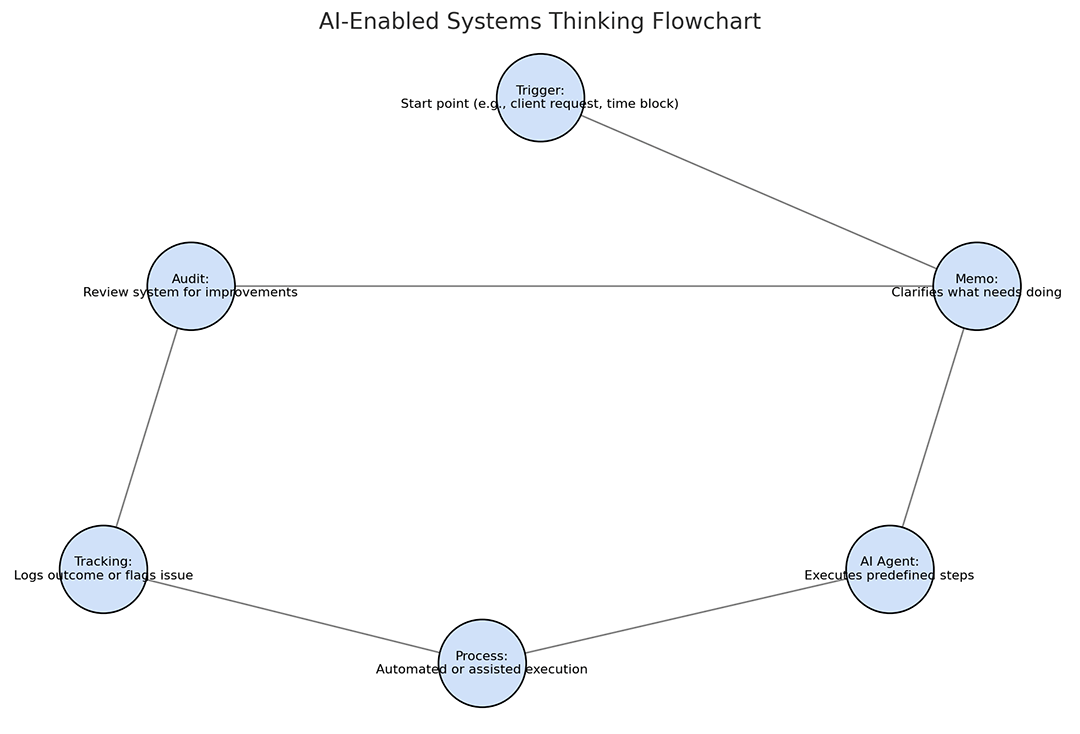
Most people treat AI like a Swiss Army knife: versatile, impressive, and ready for everything. But what they really need is a railway system, a framework where each train (or agent) knows where to go, when, and why.
Here’s how that works:
Triggers initiate action.
Think: a customer enters the marina → your agent starts prep work.
Processes execute the plan.
Think: document is written, sent, and logged automatically.
Tracking creates feedback.
Think: did the system close the loop? Did the client respond? What broke?
This isn’t mechanical. It’s human-compatible structure. As Checkland pointed out, systems don’t live in vacuum-sealed logic—they live in messy, people-filled realities. That’s why memo culture, audit loops, and role definition matter more now than ever. They provide scaffolding for your AI to actually perform.
✍️ Why Emotional Energy Isn’t a Business Strategy
Waiting until you feel motivated is a recipe for delay. Systems thinking reframes emotion as context, not command. You build the gym routine so it works on off days. You schedule the client call with AI support so it doesn’t get lost in a fog of stress.
The same is true at scale.
Your AI agents shouldn’t have to guess when the meeting is, who’s accountable, or what “done” looks like. The system should already answer those questions.
🧠 The Real Question
“Can I walk away from this system and have it still work?”
If not, it’s not a system, it’s a performance. And performances exhaust people.
Great systems don’t just replace effort. They replace uncertainty. They let you focus on strategy, story, and service while the scaffolding holds the rest.
✅ Start Building Systems Your AI Can Actually Use
Set aside 30 minutes this week to sketch one process you repeat. Map its trigger, steps, and tracking method.
Then ask: What parts could AI support?
You’ll find clarity. You’ll reduce friction. And you’ll move from firefighting to architecture.
(Review the FAQ above if you get stuck.)
Stephen Bray blends lived experience, hard-won lessons, and a quiet sense of humour to help leaders move forward. Read more here.
© 2025 Stephen Bray. Patterns in life and business, simply told.