The Resonance Effect
What Tesla, Quantum Physics, WWII Codebreakers, and a 17th-Century Japanese Family Can Teach Today’s Businesses
If you strip away the jargon from modern physics, the mysticism from consciousness studies, and the romance from old engineering tales, a surprising pattern emerges. The best breakthroughs, whether in science, strategy, or leadership, come from the same source.
Resonance.
A tuning.
An alignment with something deeper than logic.
This insight is not new.
Tesla engineered it.
Zen monks meditated on it.
Bletchley Park codebreakers stumbled into it.
And in the 1600s, the Mogi family—founders of the Kikkoman Corporation—built their entire governance system upon it.
Today’s organisations are rediscovering what earlier generations already knew:
Success belongs to those who learn how to recognise the invisible patterns forming beneath the surface.
This article explores how those patterns form, what creates resonance inside complex systems, and how businesses can harness these principles to make better decisions, build stronger cultures, and stay adaptive in a world moving faster than any spreadsheet can calculate.
1. The Hidden Pattern Behind Breakthroughs
In 1903, Nikola Tesla powered light bulbs miles away without using a single wire.
In 1982, Alain Aspect proved that particles can communicate faster than light.
In World War II, several ordinary people spotted extraordinary patterns that changed the course of history.
None of these breakthroughs came from brute-force logic.
All came from people tuned, intuitively or intentionally, into the deeper field beneath the obvious one.
Modern cognitive science calls it pattern recognition.
Quantum physics calls it nonlocal correlation.
Leadership theorists now call it systems sensing.
But the word “resonance” captures the essence:
When individuals or organisations align with deeper patterns, insight arrives faster than analysis.
This is not mystical. It’s practical.
2. Tesla and the Power of Outer Resonance
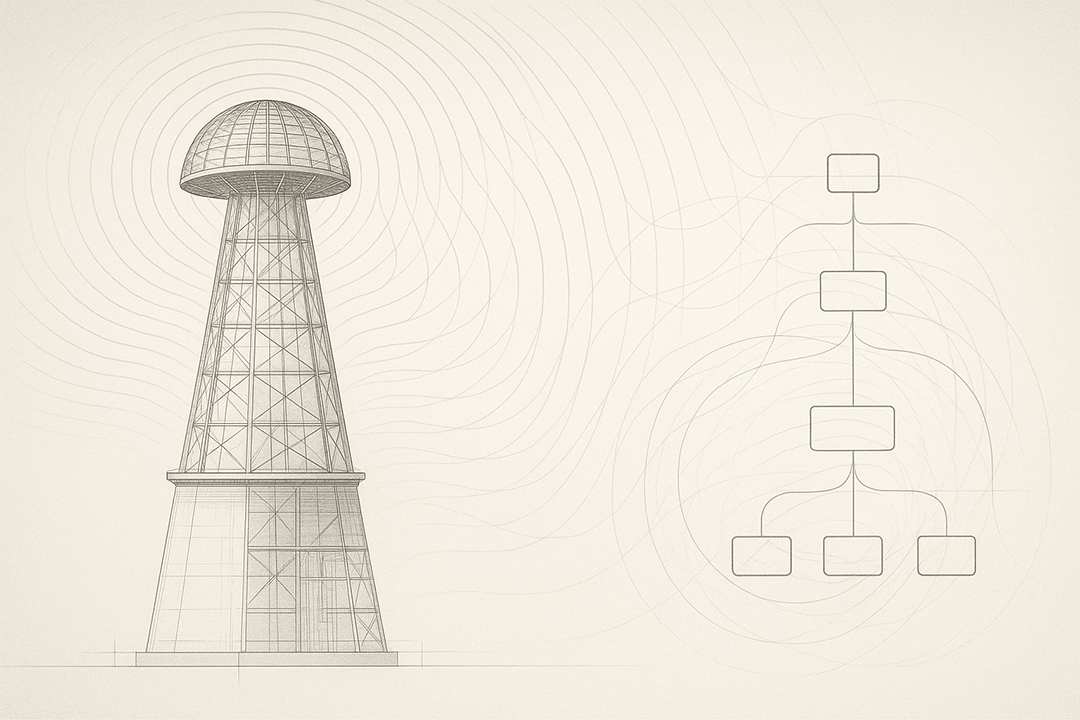
Tesla believed the Earth itself was a giant conductor, capable of carrying electrical waves around the globe. He tried to build a device—Wardencliff Tower—that could tap into this natural resonance.
His worldview was simple:
Nature runs on patterns.
Align with them, and you gain leverage.
Fight them, and you lose energy.
Every modern business leader knows this instinctively.
When a team is aligned, work feels effortless.
When a market is ready, growth feels inevitable.
When a product hits a cultural moment, adoption accelerates.
Tesla was describing the same thing just with copper coils instead of spreadsheets.
3. Inner Resonance: Consciousness as a Pattern Detector
In the 1970s, engineer Itzhak Bentov and researcher Robert Monroe claimed that human consciousness behaves like a tuning fork. According to their theory, meditation and altered states let the brain synchronise into deeper layers of reality—just as Tesla synchronised with Earth’s electrical field.
Whether or not you accept the spiritual language, the behavioural effect is real:
Calm minds detect subtle signals.
Stressed minds miss obvious risks.
Focused minds sense opportunities before data confirms them.
Executives now pay thousands of pounds for mindfulness training because Bentov was right:
internal resonance predicts external performance.
4. Interface Resonance: Hoffman and the Limits of Perception
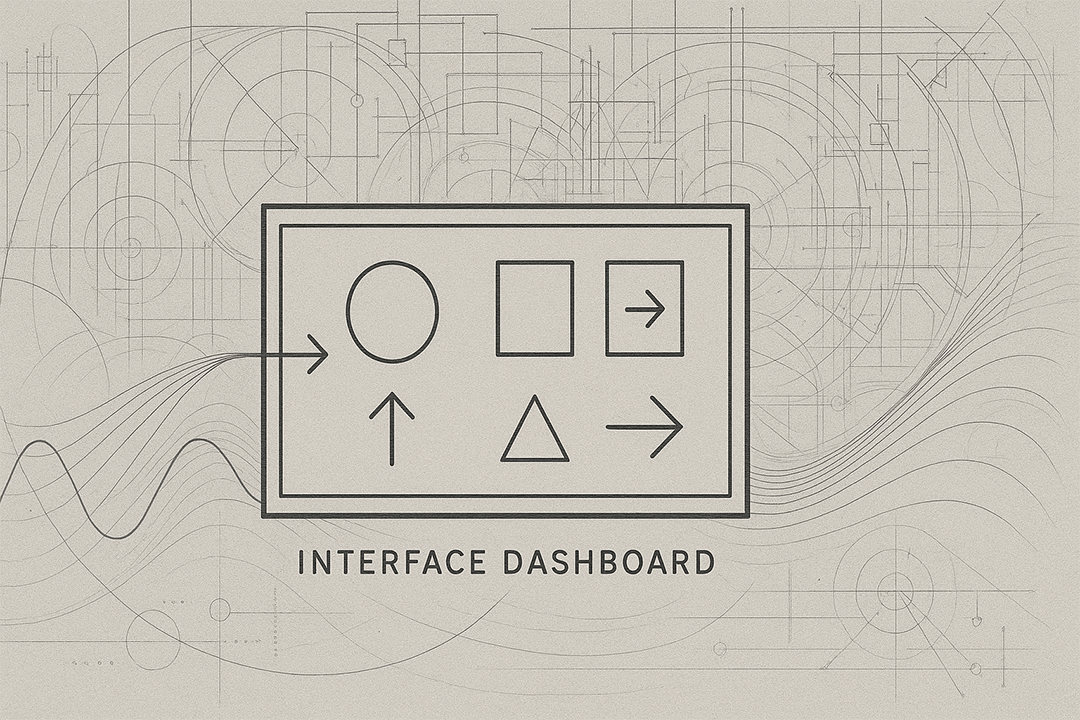
Cognitive scientist Donald Hoffman argues that our experience of the world is not reality.He calls it an interface. A dashboard. A simplified display that hides the real machinery underneath.
If this sounds abstract, consider this:
No leader sees “reality.”
They see dashboards.
Metrics. Forecasts. Incentive maps. Biased reports.
The job of leadership is not to stare harder at the interface.
It’s to infer the deeper system beneath it.
In business terms:
you don’t manage metrics. You manage the system producing the metrics.
Hoffman’s contribution is a reminder that acting on surface appearances such as numbers, or quick conclusions, is the surest way to miss the deeper pattern forming underneath.
5. The Collapse of “Which Comes First?”
Scientists used to fight over which was fundamental: matter or consciousness.
Then Bell (1964) and Aspect (1982) showed something strange:
the universe does not behave like a set of isolated objects.
Cause and effect don’t always follow time.
Distance doesn’t always slow influence.
And observation changes outcomes.
This means the old hierarchy—“A causes B”—breaks down.
In business, this is equally true:
Culture does not simply follow strategy.
Strategy does not simply follow markets.
Markets do not simply follow technology.
They co-arise.
They shape one another.
They exist in a dynamic loop.
The world works less like billiard balls
and more like teams in a complex, continuous negotiation.
6. WWII Happensense: When Awareness Outperformed Machinery
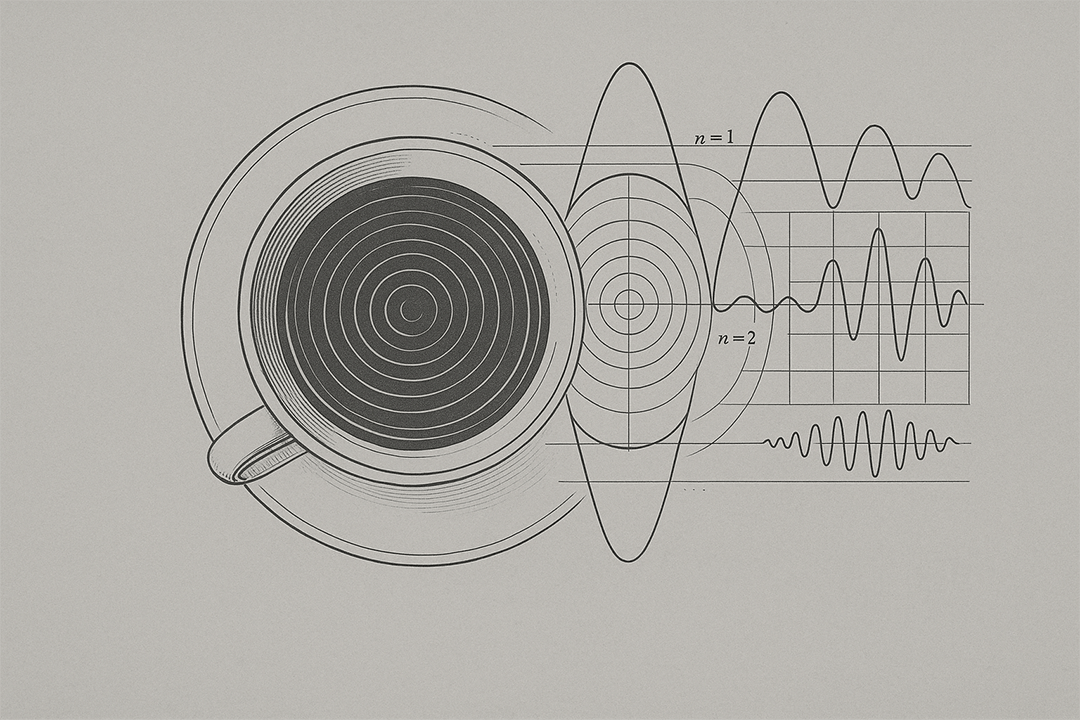
Several wartime breakthroughs were not made by experts but by ordinary people noticing subtle patterns:
Leading Seaman Thomas McKenzie spotted strange ripples in his teacup,
a hint of a U-boat that sonar had missed.
Margaret Howard, a junior clerk, realised marks on a torn typewriter ribbon repeated a sequence, enabling the decryption of Japan’s naval code.
Eleanor Winters discerned patterns in kamikaze strategy that analysts overlooked.
These were not “lucky accidents.”
They were humans acting as sensitive resonant instruments, picking up currents machines could not detect.
Modern organisations make the same mistake as the wartime intelligence agencies:
They trust the machinery.
They overlook the people closest to the signal.
The lesson is clear:
Insight often enters through the smallest aperture if someone is allowed to speak.
7. What Zen, Advaita, and Steiner Tried to Tell Us
Across centuries, contemplative traditions converged on one insight:
The boundary between observer and system is porous.
Zen teaches that perception and reality co-create one another.
Advaita teaches that consciousness and world arise together.
Steiner argued that thinking is a kind of sensing, not just reasoning.
In today’s organisations, this becomes incredibly practical.
When a leader says:
“Why isn’t the team engaged?”
“Why are customers behaving irrationally?”
“Why isn’t strategy landing?”
They often overlook the simplest answer:
The system reflects the consciousness observing it.
Culture, morale, and clarity are not “out there.”
They are resonances of leadership behaviour.
8. The Codex Universalis: A Modern Framework for Business Resonance
The Codex Universalis, an emerging integrative framework, offers a way to unify all these insights.
It proposes that identity, behaviour, culture, and even markets are harmonic expressions of a deeper field.
For business, this means:
Teams are not collections of individuals.
They are resonant fields.
Culture is not a policy.
It is a pattern of interaction.
Leadership is not authority.
It is coherence.
Innovation is not randomness.
It is a shift in frequency.
Conflict is not dysfunction.
It is dissonance that wants to resolve.
Seen this way, Tesla, QQM entanglement, Zen practice, and wartime pattern-recognition all describe the same mechanism:
Systems work when they are harmonised.
They break when they lose coherence.
And this brings us directly to one of the oldest business governance documents in the world.
9. The Mogi Family Code: 400 Years of Organisational Resonance
The Mogi family created Kikkoman in the 1600s and built it into a global brand that still thrives today. Their 17th-century governance document reads like an early blueprint for organisational resonance.
Let’s look at its lessons through the lens of modern complexity theory.
Article 1: “All family members desire peace.”
In today’s terms:
psychological safety precedes innovation.
Article 2: “Keeping faith leads to peaceful mind.”
A calm mind perceives subtle signals.
Stressed minds distort them.
Article 3: “If the master is not polite, others will not follow.”
Leadership behaviour entrains the entire system’s frequency.
Article 4: “Virtue is the cause, fortune the effect.”
They understood lagging indicators centuries before dashboards.
Article 5: “Business depends on people.”
So does resonance.
Roles must match natural frequencies.
Article 10: “True earning comes from the labour of sweat.”
Integrity generates coherence; exploitation generates entropy.
Article 11: “Avoid extreme competition.”
Dissonance collapses systems.
Reasonable competition expands them.
Article 13: “Never try to do anything alone.”
Collaboration improves signal detection.
Information shared is resonance compounded.
Article 14: “Don’t carelessly fall into debt.”
Dissonance accumulates if not disciplined.
Article 15: “Consult others before decisions.”
The system becomes smarter when its resonances align.
Kikkoman’s success is not accidental:
The Mogi family built a self-correcting, self-harmonising organisation before the word “governance” existed.
10. What Today’s Leaders Can Take From All This
The world is moving too fast for linear thinking.
Data alone cannot save you.
Best practice is already outdated by the time it’s published.
The leaders who thrive are those who learn to sense the deeper field.
Here are the new rules for modern business:
1. Tune your organisation before you try to direct it.
Coherence beats control.
2. Build teams that recognise patterns early.
Most competitive advantages come from micro-signals.
3. Treat culture as a field, not a slogan.
It resonates from behaviour, not posters.
4. Practice internal resonance.
Calm leaders create clear systems.
5. Honour intuition—but discipline it with clarity.
Happensense without structure is chaos.
Structure without happensense is blindness.
6. Borrow governance from the Mogi family.
They discovered centuries ago that
harmony is the foundation of longevity.
Final Thought:
Your Business Is a Field, Not a Machine**
You don’t have a culture.
You broadcast one.
You don’t “manage people.”
You shape the resonance they work within.
You don’t predict the future.
You sense the pattern forming underneath it.
Whether we talk about Tesla’s coils, Zen monks, Hoffman’s conscious agents, the Mogi family, or wartime codebreakers, the message is always the same:
The future belongs to the organisations that learn to listen to the deeper field.
The rest will drown in noise,
© 2025 Stephen Bray. Patterns in life and business, simply told.