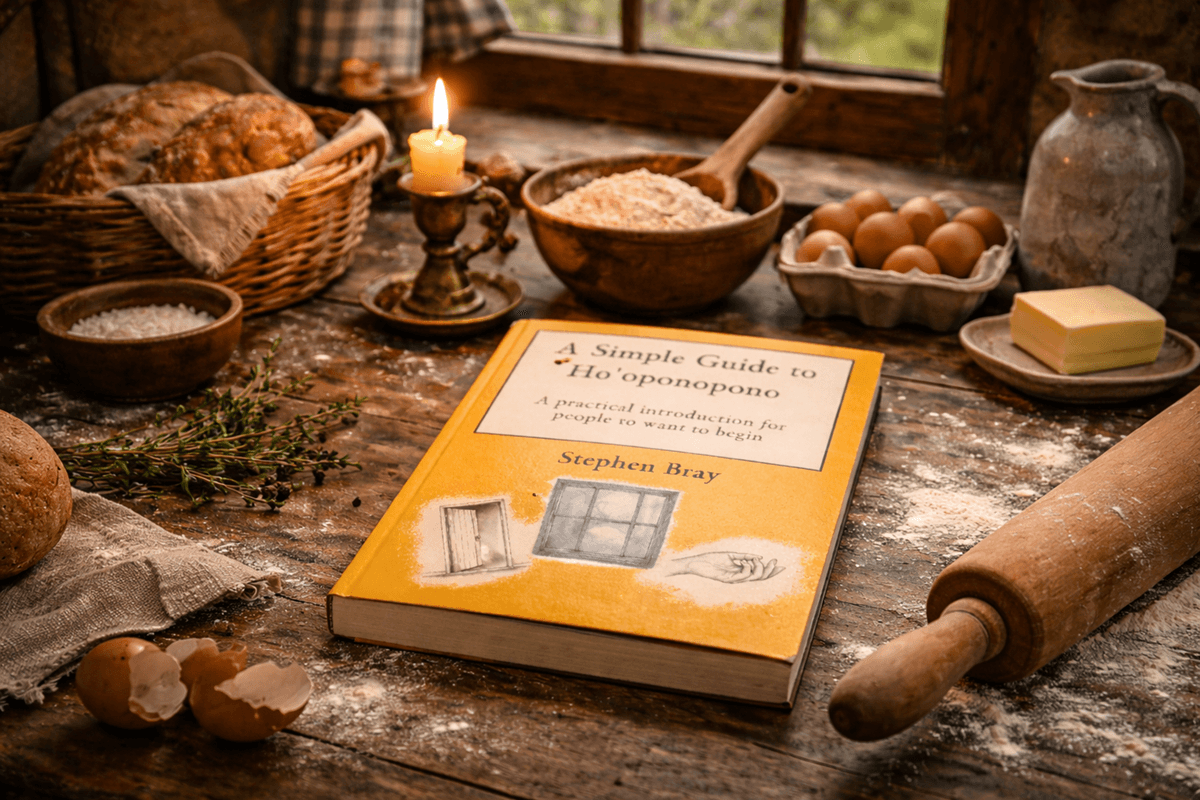
A Simple Guide To
Ho'oponopono
A practical guide for those who want to begin.
Life can sometimes feel heavier than it needs to. The same fears return. The same reactions repeat. Old memories and emotional patterns can cloud the way we see ourselves, other people, and the world around us. Ho’oponopono offers a simple way to begin clearing that inner burden.
This short book gives a clear and practical introduction to the practice in direct, accessible language. It explores what “data” means, why the subconscious inner child matters, how the four phrases work, and how breath, patience, and repetition can bring greater peace into everyday life.
You do not need to master a complicated system to begin. You only need a willingness to pause, to clean, and to let the practice do its quiet work.
This book opens the door. The next step belongs to you.
Preface To The Book
Sometimes life does not feel hard because of what stands in front of us.
It feels hard because of what keeps rising inside us.
A small remark can spoil a whole day. An old fear can return without warning. The same kind of argument can happen again and again. A person can promise themselves they will stay calm next time, yet something in them reacts before they can stop it.
This short book offers a simple introduction to ho'oponopono for people who want help, not heavy theory. It does not try to cover everything. It does not ask you to adopt a religion or force yourself into strange beliefs. It offers a practical way of understanding the emotional clutter that can make life feel harder than it needs to feel, and a simple way of beginning to clear it.
I did not come to this lightly.
I have spent more than fifty years working as a social worker, psychotherapist, and business mentor. Across those years I have studied psychology, behavioural economics, and systems theory in a serious way. I have listened to people in pain, watched people repeat the same patterns, and seen how often human beings suffer not only because of events, but because of the meanings, memories, and reactions those events stir inside them.
Over time, all of this experience led me towards ho'oponopono.
I write about it now because, from every angle I know how to examine, it works. It may not fit neatly inside every conventional explanation. It may not satisfy every academic demand at first glance. Yet again and again I have seen that when people begin to clear what rises within them, something changes. Life loosens. New possibilities appear. Old patterns weaken.
In this book, I use the word data for that inner clutter. By data I mean old memories, emotional habits, learned reactions, and repeating patterns that sit in us and colour how we see the world.
When that data begins to clear, many people notice more calm, more space, and more choice. They may still have the same family, the same work, and the same responsibilities. But they meet those things differently.
This guide stands as the simple doorway. My longer books explore the wider history, deeper meaning, and larger questions in much more detail. This one aims to help you begin. If some part of you feels tired, burdened, stuck, or quietly ready for change, this book may help you put your feet in the water.
“All the world’s a stage,
And all the men and women merely players;
They have their exits and their entrances ...”
William Shakespeare
More than thirty years ago, long before ho'oponopono became central to my work, a client came to see me with a remarkable story.
He described a chain of events and co-incidences that did not fit easily into ordinary cause and effect. The experiences seemed to have the strange feel of a dream. They carried a logic, but not the usual kind. They felt full of meaning, yet difficult to explain in the normal way.
Instead of dismissing what he brought, we decided to work with it as if it were a dream.
That decision changed everything.
As we explored the images, connections, echoes, and emotional meanings within what had happened, the client gained a level of understanding that astonished both of us. What had first looked like a strange series of outer events began to reveal an inner pattern. The work moved quickly and deeply. Within a relatively short time, he found a bride, moved to another country, and gave up drink.
I do not offer that story as a cheap miracle tale. I offer it because it marked a turning point in my own understanding. It showed me that the world people experience often carries layers that do not yield to surface logic alone. It showed me that when a person starts to work at the level of deeper pattern, real change can happen.
That work became a kind of prequel to my later way of helping people. Much later still, it helped prepare me for ho'oponopono. By the time I came to it, I had already seen enough to know that the surface story rarely tells the whole story.
Imagine looking through a window on a bright day.
Outside, the light shines. The world remains there. The view may include sea, sky, trees, hills,
or simply the ordinary street outside your home.
Yet the glass has become dirty.
Truth no longer depends mainly on careful seeing. It starts to depend on repetition, emotional force, familiarity, and social approval. The more often something gets repeated, the more real it can begin to feel, even when it has little depth behind it.
In a world like this, people can start to live at one remove from life itself. Everything feels filtered, staged, and slightly unreal. The symbol begins to replace the substance. The performance begins to replace the person. . . .
. . . When the machinery of labels, stories, signals, and conditioned reactions becomes visible, something important happens.
The outside world no longer disappears, but it loses some of its spell. Symbols stop passing so easily as substance. Emotional prompts stop commanding the same obedience. Fear loses some of its glamour. Public stories lose some of their power to define reality completely.
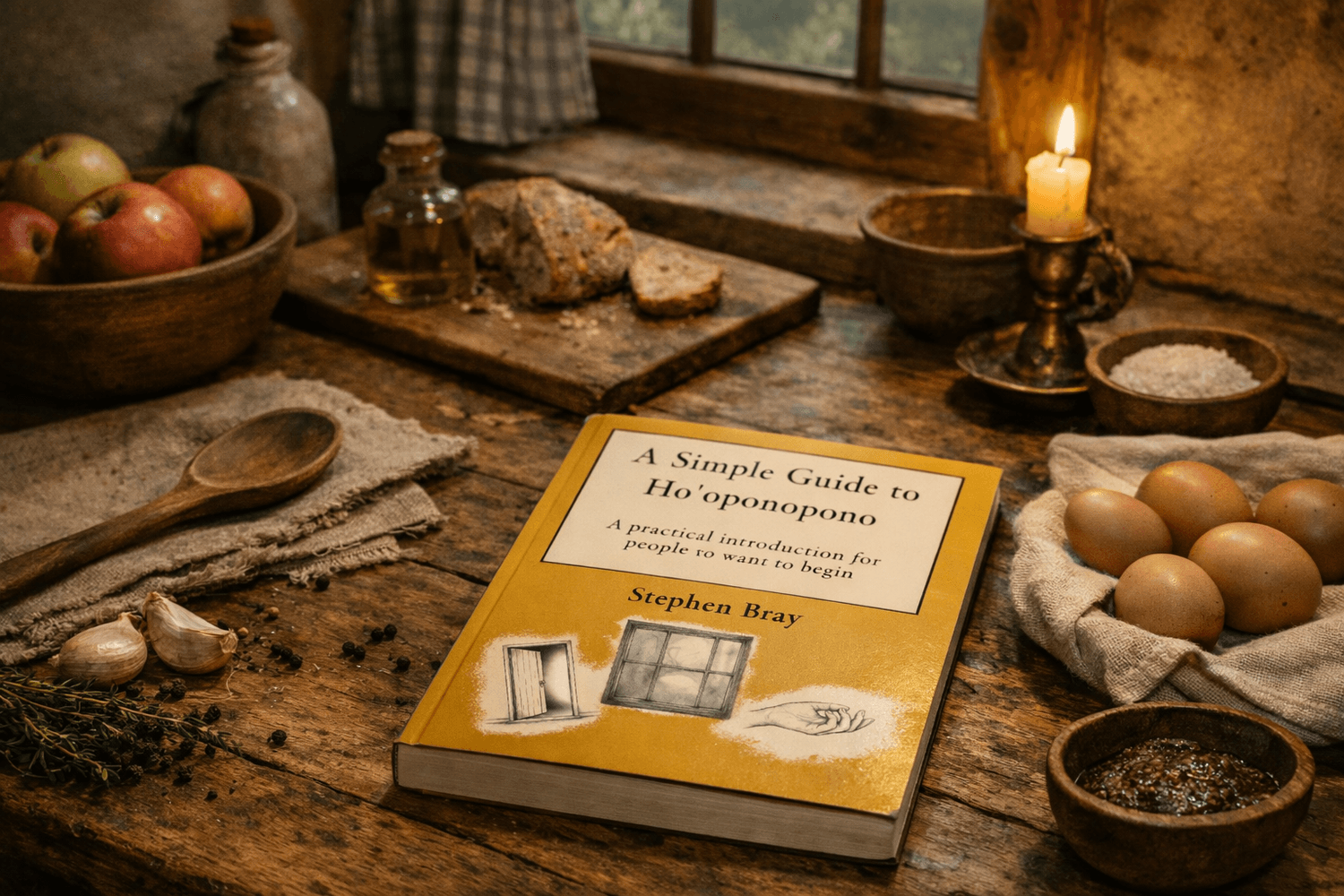
Why I Wrote This Book
This book differs from the first two in the series. Its purpose is to help explorers understand what ho’oponopono involves and how to practise it, without slipping into too many unhelpful habits.
When Morrnah Nalamaku Simeona shared the method beyond Hawai‘i, people naturally reshaped it through their own cultures. In the West, it often came to be framed as a way to “get things.” You may see some gains, you may not, but that does not reach the heart of the practice.
The same applies to asking others to chant for you. The real work takes place in your own field.
You chant for yourself.
This book does not tell the whole story. For that, you will need the two earlier volumes in the series: Ho’oponopono: What Is It? Can It Help? What Are Its Limitations? and Deep Ho’oponopono: What Makes Ho’oponopono Unique, and Why It Differs from the Law of Attraction. It will, though, help those new to the field make a steady and informed beginning.
You may never understand life in the same way again!
As an Amazon Associate I earn from qualifying purchases.